
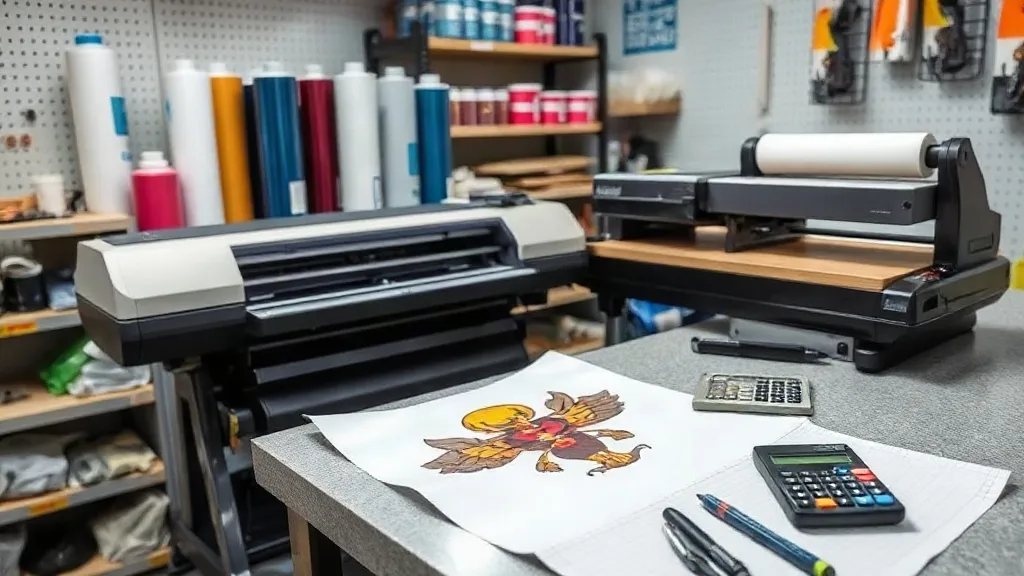
If you run a print shop, you already know that dtf transfers can be a game-changer for offering vibrant, durable custom apparel. But when it comes to pricing your services, the million-dollar question is: what does it actually cost to produce a DTF transfer? Without a clear breakdown, you risk underpricing your work or overpricing and losing customers. This article dives into the nitty-gritty of DTF transfer costs, from materials to labor, and offers practical tips to help you set profitable prices.
The Anatomy of DTF Transfer Costs
Before you can price your DTF transfers, you need to understand the components that make up the cost. Unlike screen printing or vinyl, DTF involves a specific set of consumables and processes. Let's break it down.
1. Film
The film is the foundation of any DTF transfer. It's a special coated PET film that receives the printed design. Film costs vary based on quality, thickness, and size. On average, a sheet of A3 film (11.7 x 16.5 inches) costs between $0.30 and $0.60, while A4 (8.3 x 11.7 inches) ranges from $0.15 to $0.30. For a typical adult t-shirt design, you'll use about half an A3 sheet, so the film cost per print is roughly $0.15 to $0.30.
2. Ink
DTF printing uses specialized pigment inks, typically CMYK plus white. White ink is crucial for opacity on dark fabrics, and it's often the most expensive. Ink costs can be calculated per square inch. A liter of DTF ink might cost $60 to $100, and coverage varies by printer and design. For a full-color design with white underbase, expect to use about 1-2 ml of ink per A4-sized print. That translates to roughly $0.10 to $0.25 per print, depending on the design's ink coverage and the ink brand.
3. Powder (Adhesive)
After printing, the wet ink is dusted with a thermoplastic polyurethane (TPU) powder, which acts as the adhesive when heat-pressed. Powder costs around $20 to $40 per kilogram. A kilogram can cover approximately 100 to 150 A4 sheets, so the cost per print is about $0.13 to $0.40. The exact usage depends on the powder's particle size and your application method.
4. Printer Maintenance and Depreciation
Your DTF printer is a significant investment, ranging from $3,000 for entry-level models to $30,000 for industrial machines. To account for depreciation, divide the printer's cost by its expected lifespan (typically 3-5 years) and then by the number of prints you produce annually. For example, a $10,000 printer expected to last 5 years and produce 10,000 prints per year would cost $0.20 per print. Additionally, budget for maintenance: printhead cleaning, replacement parts, and occasional repairs can add another $0.05 to $0.10 per print.
5. Labor
Labor is often overlooked but is a significant cost. The DTF process involves printing, powdering, curing, and sometimes weeding (though DTF doesn't require weeding like vinyl). For a small shop, the time spent per transfer might be 2-5 minutes, including handling. If you pay yourself or an employee $15 per hour, that's $0.50 to $1.25 per print. For larger batches, labor per unit decreases due to economies of scale.
6. Utilities and Overhead
Don't forget electricity, rent, and other overhead costs. These are indirect but should be allocated per print. A reasonable estimate is $0.10 to $0.30 per print, depending on your shop's efficiency and location.
Total Cost Per Transfer: A Sample Calculation
Let's put it all together for a typical A4-sized DTF transfer printed on a mid-range printer.
- Film: $0.20
- Ink: $0.15
- Powder: $0.25
- Printer depreciation: $0.20
- Maintenance: $0.07
- Labor: $0.75
- Overhead: $0.20
Total cost per transfer: approximately $1.82
This is just a baseline; your actual costs will vary based on your specific situation. For instance, if you produce high volumes, your per-unit costs for film, ink, and powder might drop due to bulk purchasing. Conversely, if you're a small shop with low volume, your per-unit costs could be higher.
Pricing Strategies for Profitability
Knowing your costs is step one; pricing for profit is step two. Here are some strategies to consider.
Cost-Plus Pricing
The simplest method is to add a markup to your total cost. A common markup for custom apparel is 2.5 to 3 times the cost. Using our example, a transfer costing $1.82 would be priced at $4.55 to $5.46. This covers your costs and provides a healthy profit margin. However, be mindful of market rates; if competitors are charging less, you may need to adjust.
Value-Based Pricing
Instead of focusing on cost, consider the value you provide. DTF transfers enable vibrant, full-color designs on various fabrics without the setup costs of screen printing. For small batches, this is a huge advantage. You can price based on the convenience and quality you offer. For example, a customer ordering a single custom t-shirt might be willing to pay $25-$30 for the shirt with a DTF transfer, even if the transfer cost you $2 to produce. The perceived value of a one-off custom item is high.
Volume Discounts
Encourage larger orders by offering tiered pricing. For example, price the first 10 transfers at $5 each, the next 20 at $4.50, and 50+ at $3.75. This incentivizes customers to order more and helps you spread your fixed costs over more units.
Competitive Analysis
Regularly check what other shops in your area are charging for DTF transfers. If you're just starting, you might need to price slightly lower to attract customers. But don't compete solely on price; emphasize quality and service. Many customers are willing to pay a premium for fast turnaround and excellent print quality.
Avoiding Common Costly Mistakes
Even experienced shops can fall into traps that eat into profits. Here are a few to watch out for.
- Underestimating ink usage: Designs with large solid areas or heavy white underbase use more ink. Always calculate ink cost based on the actual design, not an average.
- Ignoring printer maintenance: Neglecting regular maintenance leads to clogs and costly repairs. Set aside a maintenance budget and stick to a cleaning schedule.
- Wasting powder: Excess powder can be reused if kept clean and dry. Invest in a powder recovery system to save money.
- Not factoring in labor correctly: If you're not paying yourself a wage, you're not running a sustainable business. Include labor costs in your pricing.
Frequently Asked Questions
How much does it cost to produce a DTF transfer?
The cost to produce a DTF transfer typically ranges from $1.50 to $2.50 for an A4-sized print, depending on factors like ink coverage, film quality, and labor rates. High-volume shops can achieve lower costs through bulk purchasing and efficient processes.
What is the profit margin for DTF transfers?
A healthy profit margin for DTF transfers is around 50-60%, meaning you should aim to price at 2.5 to 3 times your cost. However, this can vary based on your market and perceived value. Custom apparel often commands higher margins.
Can I use DTF transfers for small orders?
Absolutely. DTF transfers are ideal for small orders because they eliminate setup costs associated with screen printing. You can print one-offs without breaking the bank. Just ensure your pricing reflects the per-unit cost, which may be higher for very small quantities.
How do I find dtf transfers near me?
If you're looking for local DTF transfer services, a quick online search for "dtf transfers near me" will show nearby providers. When choosing a supplier, consider their turnaround time, minimum order requirements, and reputation for quality. Many local print shops now offer DTF transfers as a service.
What is the best way to store DTF transfers?
Store unused DTF transfers in a cool, dry place, away from direct sunlight. Keep them flat to prevent creasing. Properly stored transfers can last for several months without losing adhesive quality.
Understanding the costs behind dtf transfers is essential for any print shop owner. By breaking down expenses and adopting smart pricing strategies, you can ensure your DTF offerings are both competitive and profitable. Remember, quality and service are your best differentiators, so invest in good materials and maintain your equipment. For more insights on DTF technology and supplies, explore our resources.