
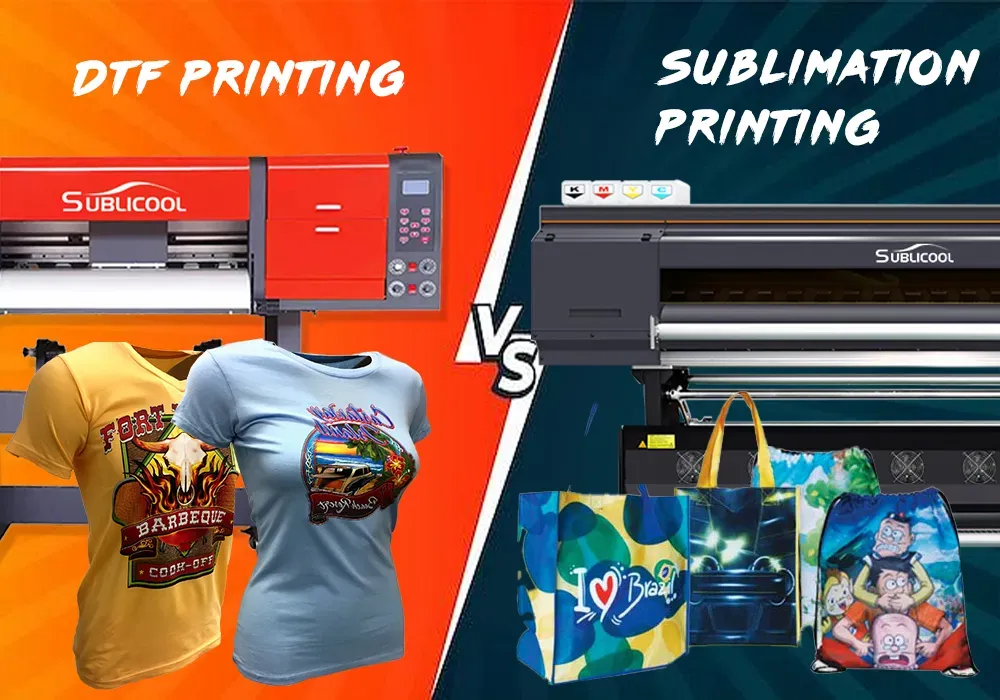
DTF vs sublimation is more than a simple label—it's a practical crossroads for shop owners, hobbyists, and on-demand producers because the choice shapes material compatibility, production speed, and long-term operating costs across a wide range of fabrics. Each method brings distinct strengths depending on fabric blends, ink systems, and the type of order you'll run, so understanding the differences can prevent misfires on substrate selection and color handling. DTF printing advantages include opaque white coverage on dark fabrics, versatile fabric compatibility, and a forgiving workflow when you need detailed gradients or variable runs, which helps maintain consistency across mixed-product catalogs. Sublimation limitations on cotton mean this route shines on polyester and polymer-coated substrates where the dye bonds with fiber, delivering a smooth hand and vibrancy, while natural fibers may require alternative approaches. By weighing these trade-offs alongside substrate availability, finish quality targets, and expected order volumes, you can chart a path that optimizes cost, turnaround, and customer satisfaction.
Viewed through an alternative lens, this comparison maps to a film-transfer approach versus a dye-sub workflow, emphasizing surface transfers versus fiber-embedded color. In practice, you might hear terms like film-based transfer, dye-sub printing, heat press processing, or white-ink-on-dark strategies, all pointing to the same core trade-off between setup flexibility and substrate-specific performance. Understanding these semantically related terms helps designers and shop managers plan substrate choices, estimate costs, and tailor production lines to polyester-dominant products or cotton-rich catalogs.
DTF vs sublimation: A Fabric-First Guide to Print Methods
Direct-to-film printing vs sublimation is a common crossroads for print shops and makers alike. By starting with a fabric-focused view, you can predict how a transfer will perform on cotton, blends, or synthetics and avoid misfires that waste time and money.
This section sets up a practical framework: understand the core differences, then translate that knowledge into fabric-specific decisions, equipment needs, and workflow choices that fit your production reality.
Fabric Compatibility and Material Choices for DTF and Sublimation
DTF offers broad fabric compatibility across cotton, cotton blends, poly blends, and many other textiles, making it a flexible option for mixed garment catalogs. Understanding fabric compatibility DTF helps shops choose a system that works with current and future product lines.
Meanwhile sublimation is optimized for polyester and polymer-coated substrates, where color vibrancy is highest. On cotton or natural fibers, sublimation limitations on cotton become a practical concern, guiding you to reserve this method for synthetic bases or coated surfaces.
DTF Printing Advantages for Mixed Fabrics and Dark Garments
DTF printing advantages include opaque white ink on dark fabrics, strong color saturation on many substrates, and robust adhesion across a range of textile types. These benefits help you deliver vibrant, durable results even when a design needs full coverage.
With DTF, you can print on cotton and blends without specialized base layers, enabling on-demand runs and quick art iteration without retooling for every fabric. The DTF printing advantages extend to detailed artwork and cost efficiency for variable designs.
Sublimation Limitations on Cotton and Light Colors
Sublimation limitations on cotton are well documented: cotton fibers do not bond with sublimation inks as reliably as polyester, so vibrant, durable results require a polyester base or special coatings.
On polyester and polymer-coated items, sublimation excels with bright colors and a soft hand feel, creating a dimension where the limitations on cotton become a strategic decision rather than a hard rule.
Cost, Workflow, and Turnaround: Choosing the Right Method
Understanding cost per item, equipment needs, and consumables helps decide between DTF and sublimation. Consider how the initial investment, ongoing consumables, and maintenance impact long-term profitability for your typical order mix.
Workflow considerations, such as the powder curing step in DTF or the number of steps in sublimation, influence throughput and lead times, so align your choice with customer expectations and production capacity.
Hybrid Strategies: When to Use DTF and When to Go Sublimation
Many shops protect flexibility by adopting a hybrid strategy, reserving DTF for cotton and blends while using sublimation for polyester-based products.
This approach balances quality, speed, and price across a diverse catalog, enabling you to meet customer needs without sacrificing performance.
Frequently Asked Questions
DTF vs sublimation: how does fabric compatibility DTF compare across cotton, blends, and poly?
DTF offers broad fabric compatibility, including cotton, cotton blends, and some poly substrates, making it a flexible choice for mixed garment runs. Sublimation, by contrast, performs best on polyester or polymer-coated materials, with limited success on true cotton. This difference helps determine which method fits a given fabric mix and product lineup.
DTF printing advantages in the DTF vs sublimation comparison: what are the main benefits on dark fabrics?
DTF printing advantages include the ability to print opaque white ink, enabling bright, durable designs on dark garments. The technique handles detailed artwork and color gradients well on cotton and blends, offering reliable results without a separate base layer. This makes DTF a strong option for dark apparel inventories.
Direct-to-film printing vs sublimation: which offers better durability and wash performance across different fabrics?
DTF transfers are typically durable when properly cured and heat pressed, with performance influenced by adhesive quality and fabric type. Sublimation tends to excel on polyester, providing excellent wash-fastness since the ink becomes part of the fabric fibers. Choosing between them depends on the substrate and care expectations.
Sublimation limitations on cotton: why might DTF be preferable for cotton-heavy runs?
Sublimation has limitations on cotton because it cannot print true white on bare cotton and colors may not be as vibrant or durable on 100% cotton fabrics. DTF avoids this issue with white ink capabilities and strong color coverage on cotton and blends, making it preferable for cotton-heavy product lines.
DTF vs sublimation: how do cost and workflow differ for small-to-mid size production runs?
DTF workflows involve printing on film, applying adhesive powder, curing, and heat pressing, which can add steps and consumables per item. Sublimation generally offers a simpler workflow with screens for polyester items and lower waste at scale. For small-to-mid runs, the cost balance depends on fabric, volume, and consumable pricing.
Choosing between DTF vs sublimation: what decision criteria help a mixed-fabric catalog choose the right method?
Key criteria include the fabric mix, desired hand feel, color requirements, and production volume. A hybrid approach—DTF for cotton and blends and sublimation for polyester—often delivers the best overall quality, flexibility, and profitability for a mixed catalog.
| Aspect | DTF | Sublimation |
|---|---|---|
| Overview: What they are and how they work. | Direct-to-Film (DTF) prints CMYK on a clear film with a white ink layer, applies an adhesive powder, cures, then heat-presses onto fabrics to produce a transfer. | Sublimation uses heat to transfer dye from transfer paper into polyester or polymer-coated substrates; the dye becomes part of the fabric fibers. |
| Fabric compatibility. | Broad fabric compatibility, including cotton, blends, and many textiles; works on dark fabrics thanks to white ink. | Best on polyester or polymer-coated substrates; cannot print white directly; cotton fabrics are not ideal for vibrant sublimation. |
| Color quality and finish. | DTF provides strong, opaque color on many fabrics; white ink enables coverage on dark garments; finish can be slightly textured. | Sublimation delivers bright colors and a soft hand; ink becomes part of the fabric with a smooth finish on polyester. |
| Durability and wash performance. | Durable transfers with proper curing; longevity depends on adhesive quality and care; good on cotton and blends. | Very durable on poly; color retention after many washes; ideal for sportswear and performance fabrics. |
| Cost and equipment considerations. | Requires a white-CMYK printer, film, adhesive powders, curing unit, and a heat press; per-item costs can be favorable for small runs but higher at scale. | Requires a sublimation-capable printer, inks, transfer paper, and a heat press; cost-efficient at higher volumes due to low per-unit costs and minimal waste. |
| Workflow and turnaround time. | Print on film, apply glue powder, cure, and then heat-press; additional steps; quick for small-to-mid orders. | Typically simpler workflow: print on transfer paper, press; often fast for high-volume polyester items. |
| Customization and versatility. | Strong for multi-fabric runs; supports white ink and opaque coverage on dark fabrics. | Excellent for full-bleed, photo-realistic designs on polyester; less flexible on dark cotton. |
| Environmental and maintenance considerations. | Maintenance for white ink and adhesive powder systems; ventilation and waste considerations. | Involves heat and dye inks; ink/paper waste; generally clean with minimal post-transfer cleanup. |
| Practical considerations and decision criteria. | Best for cotton garments and mixed fabrics; good on dark fabrics; assess volume and substrate variety. | Best for polyester-heavy products and polymer-coated items; consider color vibrancy, hand feel, and care. |
| Common myths and practical tips. | Myth: DTF is always cheaper than sublimation. Reality: depends on fabric, volume, and consumables. Tips: Pre-test on sample fabrics; align with your customer base. | Myth: You can use white ink on any substrate with sublimation. Reality: substrate matters. Tips: Pre-test and consider colorfastness and care. |
| Hybrid approach. | Many shops use DTF for cotton and blends, and sublimation for polyester fabrics. | A dual strategy can maximize quality and profitability across a mixed catalog. |
Summary
DTF vs sublimation presents two powerful, distinct approaches to garment and product decoration. The best choice depends on fabric variety, desired hand feel, color requirements, and production realities. DTF offers broad fabric compatibility, opaque white coverage on dark fabrics, and a flexible workflow for mixed catalogs, while sublimation delivers vivid colors, a soft hand on polyester, and durable finishes on poly substrates. For cotton-rich lines, DTF is typically favorable; for polyester-heavy lines, sublimation often yields better color and wash performance. Many shops thrive with a hybrid approach, using DTF for cotton and blends and sublimation for polyester-based items. By aligning method with catalog and customer expectations, you can grow your printing business with clarity and purpose.